Thermal Limits
Say you run the interface well — read the signal, write to disk, pull from the archive, all of it disclosed. There's one finding left, and it decides whether you can do it again tomorrow: the component has a duty cycle.
Synthesized from the Source Code research corpus — primarily the Apprenticeship domain (energy management, learned extraversion, performance ethics) cross-checked against the intelligence-analysis work on post-session aggregation and the AI-in-sales literature. Each finding Phase 3.5-reviewed per lens, with a project-wide consistency pass. This is the closing piece; it carries the recovery evidence, the contested willpower-budget metaphor, and the project's single largest open question — which it deliberately does not resolve.
Run the interface perfectly. Read the analog signal off the person, structure the questions, write the conversation to disk before it decays, pull the right understanding back across the seam with the recorder light on and the look-up disclosed. Do every part of it the way the evidence says to do it. There is still one finding the rest of the series doesn’t reach, and it’s the one that decides whether any of the rest of it matters past Thursday. The component has a duty cycle. The question isn’t whether you can run the interface well. It’s whether you can run it again tomorrow, and the day after that, and the evidence is quietest exactly where it’s most binding.
The first piece named me as a part with a duty cycle and a thermal limit — the legacy system nobody’s gotten around to deprecating yet — and then walked past it to map everything else. This is where I come back to it. Not as a confession. As the last item on the spec sheet, the one printed in the smallest type and the one that throttles everything above it.
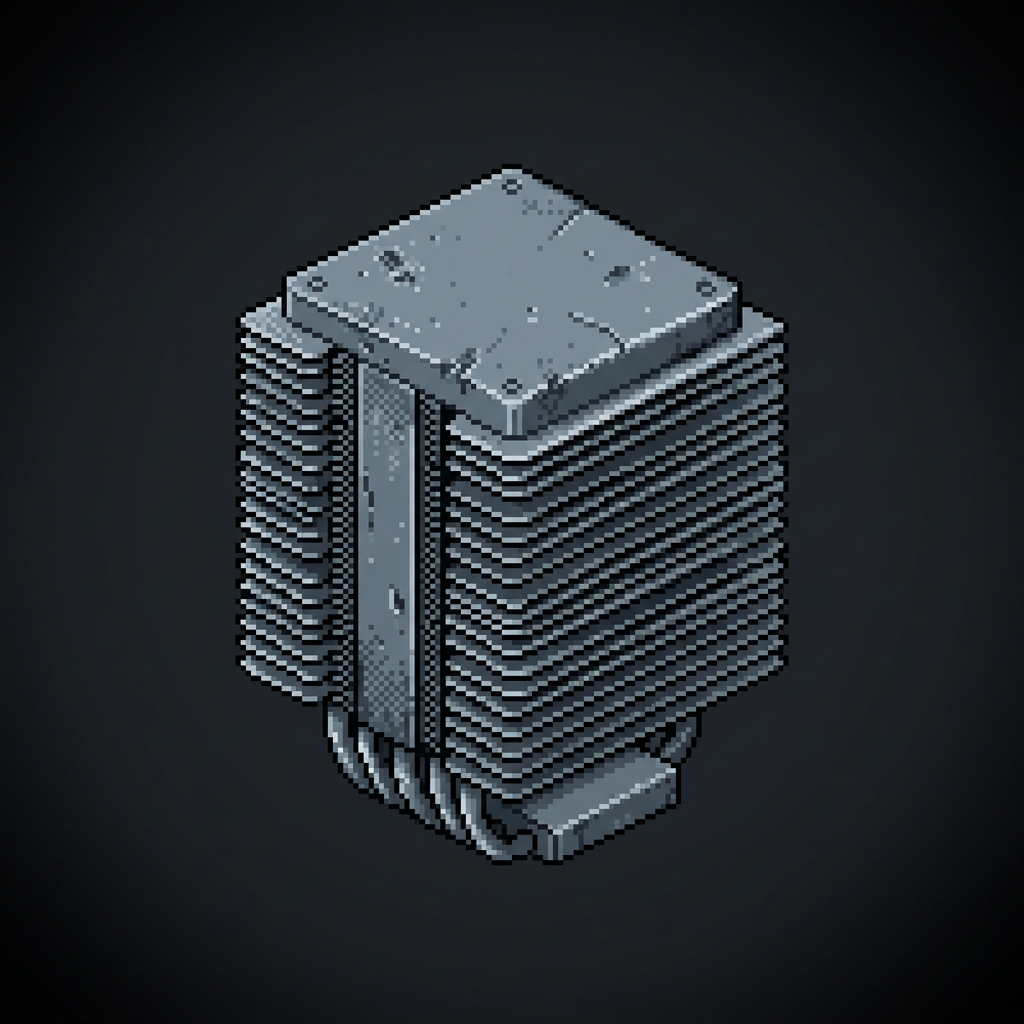
The binding constraint isn’t capability
The component, cold. Five literatures map what produces a good conversation; one, mostly ignored, governs whether you can run the next one — and it's the unglamorous part nobody spec'd the cooling for.
Five literatures converge on what produces a good conversation; one literature, mostly ignored, governs whether you can have the next one. That asymmetry is the whole piece. The corpus spends most of its weight on the input line, the output line, and the disclosure hinge between them — the things you do in and around the room. The Apprenticeship domain is the one that asks the unglamorous follow-up: what does doing all of that cost the operator, and does the cost come back?
The answer the recovery literature gives is more specific than “rest more,” and it cuts against the way the energy discourse usually frames it. The most protective recovery behavior isn’t time off; it’s psychological detachment — mentally disengaging from work content during non-work hours — and it’s the single most reliable finding in the field, converging across four independent empirical streams (Sonnentag & Fritz 2007’s recovery-experiences model; Bennett, Bakker & Field 2018, a meta-analysis of 299 effect sizes across N = 26,592; Steed et al. 2021’s 198-sample Journal of Management meta-analysis; Park, Fritz & Jex 2011). Four streams agreeing is the robustness; no single study carries it. The operational edge of the finding is the part that stings: detachment is undermined by the technological tether. A long weekend with Slack checking is corrosive. A short evening with the device off is protective. The variable isn’t hours away from the desk. It’s whether the work is still running in your head while you’re nominally off.
And there’s a trap built into it that the discourse skips. Sonnentag’s 2018 Research in Organizational Behavior paper documents the recovery paradox: the people who most need to recover recover worst, because high job stressors impair the cognitive prerequisites of detachment — the time-pressured ruminate more, sleep worse, and pick lower-quality recovery activities precisely when high-quality recovery is most needed. Passive recovery fails exactly when the week was hardest. Which means recovery can’t be the thing you do when you have the energy for it. It has to be structured in advance, while the landscape is calm — which is the same shape as the disclosure piece’s argument about consent scripts and retention schedules. Infrastructure you stand up before you need it, so you don’t have to rely on having the resources under load. Recovery is the systems-not-virtue corrective pointed back at the operator instead of the file.

The cooldown is longer than the gap you scheduled
The needle, climbing. Ten-minute breaks don't restore high-cognitive-demand work — the cooldown is longer than the gap almost everyone schedules between calls.
The most directly operational number in the recovery corpus is also the one most likely to wreck a calendar. Microbreaks — pauses of ten minutes or less — produce small but real gains in vigor and fatigue reduction for ordinary work. But Albulescu et al.’s 2022 meta-analysis (22 studies, N = 2,335) found the effect is moderated hard by task complexity: a medium effect for low-demand clerical work, and a non-significant negative effect — d = −0.09 — for high-cognitive-demand tasks. The authors’ own conclusion, stated plainly: “recovering from highly depleting tasks may need more than 10-minute breaks.” A consulting intake conversation, run the way the rest of this series says to run it — attention held outward for an hour, signal read below the noise floor, structure imposed in real time — is high-cognitive-demand work by any definition. The ten-minute gap between back-to-back calls does not restore the system. It’s a number you can set your scheduling by, and it isn’t a personality finding; it applies across the population. The aging unit doesn’t get a special exemption here, and neither does the young one. The cooldown is longer than the gap almost everyone schedules.
There’s a structural intervention with better evidence behind it than any individual hack: hybrid load allocation. Bloom, Han & Liang’s 2024 Nature randomized trial — N = 1,612, randomized by birth-date parity to two days a week of home work — found resignations fell 33% in the hybrid group, with no measured productivity cost and equal promotion rates. The limit travels with it, and it’s not small: it’s a single Chinese tech firm, 2021 data, graduate workers, in a context not yet normalized for hybrid work. The transfer to a Western solo practitioner in 2026 is inference, not measurement — and the direction is what survives, not the 33%. For an operator alternating high-interpersonal-demand days against protected lower-demand ones, the allocation logic maps cleanly even where the exact figure doesn’t transfer. Schedule the heat, then schedule the cooldown, and don’t let the heat days stack.
The honest gap in all of this is one the corpus names against its own interest. Whether introverts specifically need more recovery after social interaction than extraverts is a plausible inference from adjacent literatures — the sensory-processing-sensitivity work, the free-traits autonomic-cost mechanism — but it is not a measured quantity. The flagship recovery instrument was built on a model where, in Sonnentag and Fritz’s own words, “relations with coping and personality variables were generally low.” So the energy problem this whole project half-rests on is real at the level of mechanism and under-measured at the level of magnitude. I’d rather tell you that than borrow a precision the evidence doesn’t have. Plan for the recovery. Don’t pretend you know the exact draw.

You cannot calibrate this by how it felt
The fan, at rest. The instrument you'd most want to trust — your own read on whether it went well — is the one the evidence rates lowest. The component can't read its own temperature.
Here is the most uncomfortable result in the corpus, and it’s the one I’d most like to argue with, because it disarms the instrument I’d most want to trust: my own read on whether the conversation went well.
Lei, Wang & Pinto’s 2025 meta-analysis (55 samples, N = 9,029) looked at self-monitoring — the trainable skill of reading situational cues and adjusting your behavior to fit — and split the effectiveness ratings by who did the rating. People who self-monitor heavily believe they’re performing effectively: self-rated effectiveness correlated at ρ = .223. The people on the receiving end of that performance largely disagreed: subordinate-rated effectiveness came in at ρ = .034, non-significant, the confidence interval straddling zero. The authors’ own caution, verbatim from the open record: “the generally positive self-monitoring–leadership relationship should be interpreted cautiously, given that relationships assessed via subordinate ratings are non-significant.” The limit on it is honest — that’s leadership effectiveness in organizational hierarchies, not information yield on a single discovery call, so the magnitude may not transfer. But the direction of the bias is what matters, and the direction is consistent: the operator’s sense that it landed is the least reliable signal in the loop.
This is a tacit-knowledge wall, and it’s the same wall the rest of the series kept hitting, turned inward. The keystone piece found that the most valuable thing a source knows is the part they can’t articulate. The retrieval piece found you can only pull back what got encoded. This is that wall standing between the operator and his own performance: the felt sense of a conversation is exactly the part that doesn’t serialize into anything trustworthy. You can’t write it to disk because it isn’t data; it’s the warm haze of having been in the room. Which means the duty-cycle problem has a nasty second layer. Not only does the component overheat — it can’t read its own temperature gauge. The thing telling you “that went fine, I’ve got another one in me” is the instrument the evidence says to trust least. Calibration has to come from outside: recorded sessions, structured retrospectives, explicit client check-ins. Not from the operator’s own warm sense that the firmware’s running cool.

The metaphor is failing, and the advice survives it
The face cracks; the dial still reads. The willpower-as-budget metaphor is failing — but the behavioral advice it inspired stands on better-founded ground. Keep the finding when the metaphor dies.
The last cargo cult in the collection is the one that underwrites most of the popular talk about energy and willpower, including most of what I just told you, and it’s worth spending precisely because its collapse doesn’t take the advice down with it.
The willpower-as-budget model — self-control as a finite resource you spend down across the day, the thing your social battery is supposedly metering — traces to Baumeister’s ego-depletion research, and that research has been coming apart since 2015. Carter et al.’s 2015 bias-corrected meta-analysis found effect sizes spanning zero. Hagger et al.’s 2016 preregistered replication — 23 laboratories, N = 2,141, the kind of multi-lab design built specifically to settle a contested effect — found d = 0.04, the confidence interval again straddling zero. The 2024–2025 literature has walked it back from “failed replication” to “small effect under improved methods” — a 2025 multi-lab study put it at d = 0.10 — so the honest tag is contested, not debunked. The phenomenon may be real and badly mischaracterized: motivated disengagement dressed up as resource depletion. Either way, “I have 70% of my energy left” is folk psychology with metaphorical force, not a measured quantity. The battery isn’t a battery.
Here’s the part the read-the-source discipline exists to catch: the metaphor’s collapse leaves the behavioral advice standing. Protect recovery. Don’t expect indefinite cognitive endurance. Build in cooldown. Those recommendations don’t depend on the depletion model being true — they’re grounded in the recovery and burnout literatures, which have far better footing than the ego-depletion ancestor the heuristic borrowed its vividness from. This is the cleanest instance of the thread that ran through all six pieces, because it separates the two things the cargo cult always fuses: the technique that works and the story told about why it works. Reid-style confrontation: the story was rapport-breaking pressure extracts truth; the technique extracted false confessions. Handwriting your notes: the story was depth-of-encoding; the replication killed the story while the contemporaneity survived. Here the story is a depleting fuel tank, and the story is wrong — but you should still protect your recovery, for reasons that have nothing to do with the tank. The discipline isn’t “distrust everything.” It’s keep the finding when the metaphor dies. Carry the practice; bury the explanation that doesn’t hold.

Deep acting is the better strategy and it is not free
Drained, and corroded at the terminal. Deep acting is the sustainable mode and the one with the better record — but the draw is real, paid during the conversation, and no scheduling discipline offsets it.
The series has leaned on the surface-acting cost twice already, so I won’t re-spend the figures — the keystone piece carried them on the acquisition side: surface acting, the performance of warmth you don’t feel, drives burnout at a large, replicated effect, while deep acting, the kind grounded in genuine attention to the person, runs mildly the other way. On the recovery side, that finding does a different job. It tells you which mode of doing the work is sustainable, not just which produces better information. The operator who manufactures warmth he doesn’t feel is paying a hidden tax that no amount of scheduling discipline offsets, because the cost is incurred during the conversation, not after it. Deep acting through directed attention is the only mode the evidence says you can run at duty cycle.
But “deep acting is better” is where the contemporary literature stops and Hochschild’s original argument keeps going, and the series promised not to smooth a contested finding into a clean one. The organizational-behavior literature has domesticated Hochschild’s surface/deep distinction into a tidy binary where deep acting is simply the recommended strategy. That’s not what she wrote. Her argument in The Managed Heart was that the commercialization of feeling — selling, for a wage, the emotional technique you’d otherwise give freely — produces estrangement from your own emotional life regardless of which acting strategy you use. “Her smile is not ‘her’ smile.” Deep acting under commercial conditions still routes a genuine human response through a commodity transaction, and the transmutation has a cost the well-being effect sizes don’t capture. Both things are true at once, and the honest position holds both: deep acting wins the replicated empirical record and Hochschild’s commercialization critique stays live and unresolved. The flight attendant on a fourteen-hour shift with no back region is not the consultant with structured recovery time — which is part of why the recovery infrastructure matters ethically and not just energetically — but the question of what it does to you to make a living being attentive on demand is not one the corpus can close. It’s a permanent open edge, and it sits underneath the duty cycle like a second thermal limit nobody put a number on.

The legacy unit reads its own duty cycle
The legacy unit, still lit — the quietest the lamp has burned across the series. Rated for fewer cycles than it used to be, throttling on purpose, reading its duty cycle off an external instrument because the gauge it carries is the one it's learned not to trust.
I should say which component is narrating, because the conceit is, as ever, just the accurate description of the situation — and this is the piece where it’s least decorative.
I am, on the spec sheet, rated for fewer cycles than I used to be. Twenty-five years ago the heat was all on the screen and the recovery was a night’s sleep I didn’t think about because I didn’t have to. The work has moved off the screen and into the room, where it draws differently, and the unit doing the drawing is the same one, a quarter-century into its service life, with a cooling system that was never spec’d for sustained interpersonal load because the original workload didn’t have any. None of that is a complaint. It’s a reading off the gauge — except, per Lei, the gauge is the part I’m specifically not allowed to trust, which is its own flat little joke: the legacy hardware can’t even self-report its own temperature reliably, and the firmware that says I’m fine, schedule another is the firmware the evidence rates lowest. So I’ve stopped asking it. I look at the recorded session instead. Same move I’d make on any system whose internal telemetry I’d learned to distrust: instrument it externally, ignore what it says about itself.
The throttling is the part I’ve made peace with, because throttling is what well-designed components do when they approach a thermal limit — they don’t burn out, they slow the clock and hold. The operator who runs flat-out every day until he fails has worse architecture than the one who throttles deliberately and runs for years. That’s not a concession to age. It’s the same engineering judgment I’d apply to anything I expected to keep in production. The duty cycle isn’t the bad news at the end of the series. It’s the constraint that, taken seriously, is the only thing that makes the other five pieces survivable past the first hard quarter. You can run a hot component cool if you respect what it’s rated for. The legacy unit has one genuine advantage here, and it’s the one experience actually buys: it has overheated before, in other workloads, and it knows the difference between the heat that means the work is getting interesting and the heat that means stop. That discrimination doesn’t show up in any of the five literatures. It’s just service history. Mine happens to be long.

What runs while you sleep
The night shift — one lamp still on in the dark. The open question the whole project was built to frame: whether the agent running the disciplines in the batch window while you sleep inverts the constraint that's blocked them for fifty years. The map is finished. The territory keeps moving.
There’s a door the recovery finding leaves open, and it’s the one the whole project has been walking toward, so I’ll open it and then leave it open, because the evidence doesn’t let me close it.
The retrieval piece established that the agent earns its keep around the edges of the conversation, not inside it — precompute before, batch-job after, the heavy synthesis run off the hot path. Push that one step further into the recovery question and it becomes the most consequential thing the corpus surfaces and cannot answer. The disciplines this series recommends — the structured analytic techniques, the ambiguity scans, the requirements traceability, the post-session extraction — have always carried the same objection in the practitioner literature: too cumbersome to run under live time pressure (Marrin 2007, American Intelligence Journal; Coulthart 2016). Experienced operators skip them not because they don’t work but because the live moment has no room for them. But the post-session, agent-mediated execution dissolves the constraint that made them unworkable: the time pressure was the problem, and the batch window has no time pressure. The post-analytic evidence points the right way without settling the question — coherentizing and aggregating analytic judgments after the fact cut mean absolute error 61% in one controlled study (Mandel et al. 2018, N = 50 — a probability-judgment experiment with short-tenure analysts, so the direction transfers and the number does not), and the broader forecasting-tournament record produced 35–72% accuracy gains through training, aggregation, and tracking rather than any single technique run live.
So the question the project ends on is precise, and it is genuinely undischarged: does agent-mediated, post-session execution of these disciplines invert the “too cumbersome” objection that has always blocked their use — turning the techniques the practitioner skips in the live moment into exactly what the agent runs while the practitioner is offline? If it does, the loop quietly changes shape. The live conversation gets lighter, because the structured-extraction load shifts to the batch window. The pre-engagement dossier gets richer, because the agent can do the recalibration in the time the operator would have spent preparing. And the recovery requirement stays the binding constraint, because the one thing the agent provably cannot absorb is the operator’s parasympathetic cooldown — it can take the cognitive load off the night shift; it cannot do the operator’s sleeping for him. That’s the version where the architecture finally serves the duty cycle instead of straining it. I want it to be true. Wanting it to be true is, by this series’ own rules, the exact reason to flag that I don’t know it.
And I don’t, and neither does anyone, because the experiment hasn’t been run. It’s a clean one to specify — instrument a discovery pipeline, measure specification quality, client-rated communication, practitioner cognitive load, and time-to-spec, with and without the agent-mediated post-session pass. A discovery pipeline I built does roughly the shape of the heavy work off the hot path already; the research-as-experiment move would be to instrument it and measure, and that’s a test, not a result. The most current AI-in-sales scholarship names the same discontinuity and doesn’t resolve it either (Chaker et al. 2025, Journal of the Academy of Marketing Science). So it stays in the open column, where the series keeps the things it won’t pretend to know.
The shape of it, marked the way this series marks everything. Solid: psychological detachment is the most protective recovery behavior, across four streams; ten-minute breaks don’t restore high-cognitive-demand performance (Albulescu 2022, d = −0.09); the operator cannot calibrate the work by how it felt (Lei et al. 2025); surface acting is the costly strategy and deep acting the sustainable one, with Hochschild’s commercialization critique still live underneath it. Contested, and carried as contested: the willpower-budget metaphor is failing while the behavioral advice it inspired survives on better-founded ground. Under-measured, and admitted: the introvert-specific recovery differential is mechanism without magnitude. And genuinely open, the largest of all and the one the whole project was built to frame rather than answer: whether the agent running the disciplines in the batch window while you sleep inverts the constraint that’s blocked them for fifty years — alongside the smaller open doors of sleep, which the corpus never developed; the training pathway to deep engagement, which nobody mapped; and whether any of this generalizes past the in-person, English-speaking, WEIRD-sampled rooms where the evidence was actually gathered. The interface can be run well. Whether it can be run again tomorrow depends on a duty cycle the operator can’t read off his own gauge, served by a night shift that might or might not be quietly closing the loop on him. That’s not a resolution. It’s where the evidence stops, and so it’s where I do.
This is the closing frame — the binding constraint underneath the whole loop You Are the Interface opened, the one that piece flagged it would leave for the end. The aptitude that makes the quiet operator suited to Reading the Analog Signal is the same aptitude that draws heat here. The recovery discipline is the systems-not-virtue corrective from the frame, and the consent-and-retention infrastructure of No Stealth Mode, pointed at the operator. And the night shift it ends on is the batch window The Exocortex established — what runs while you sleep, and whether it changes the shape of the work. The map is finished. The territory keeps moving.